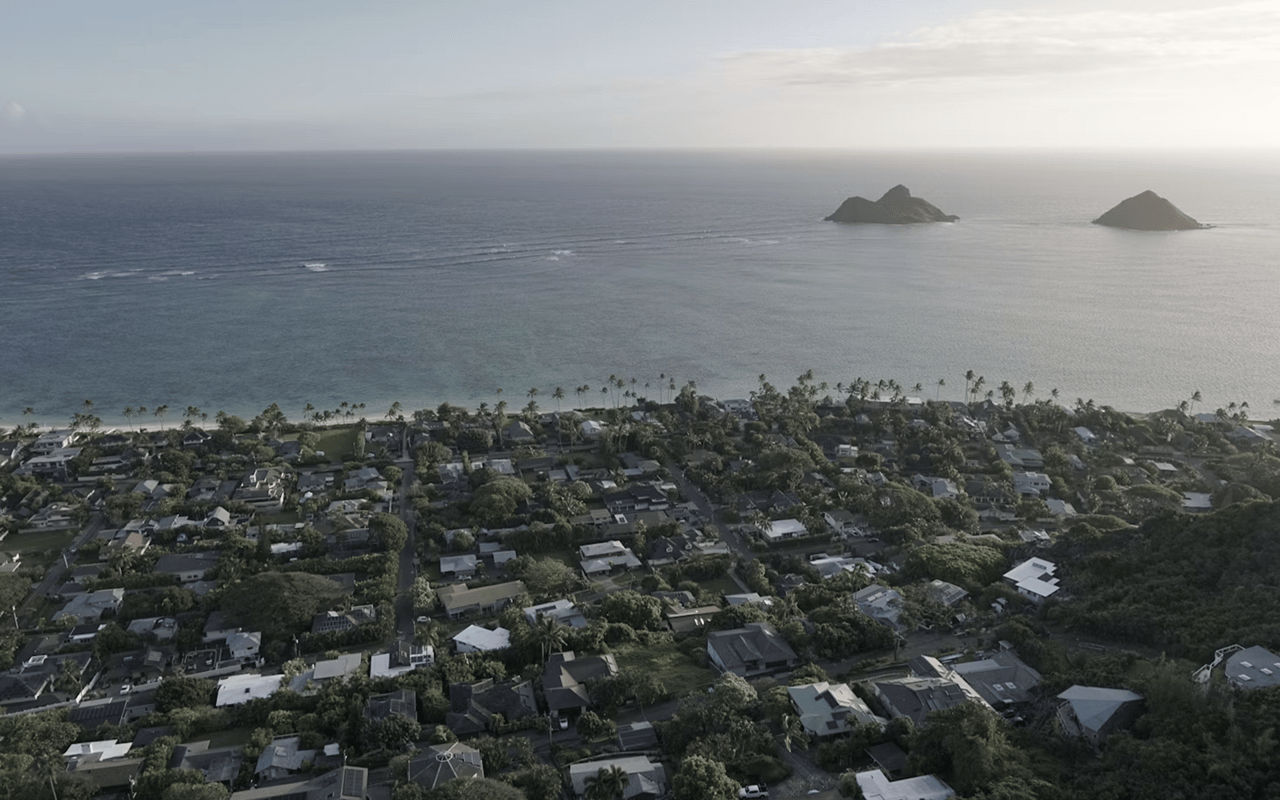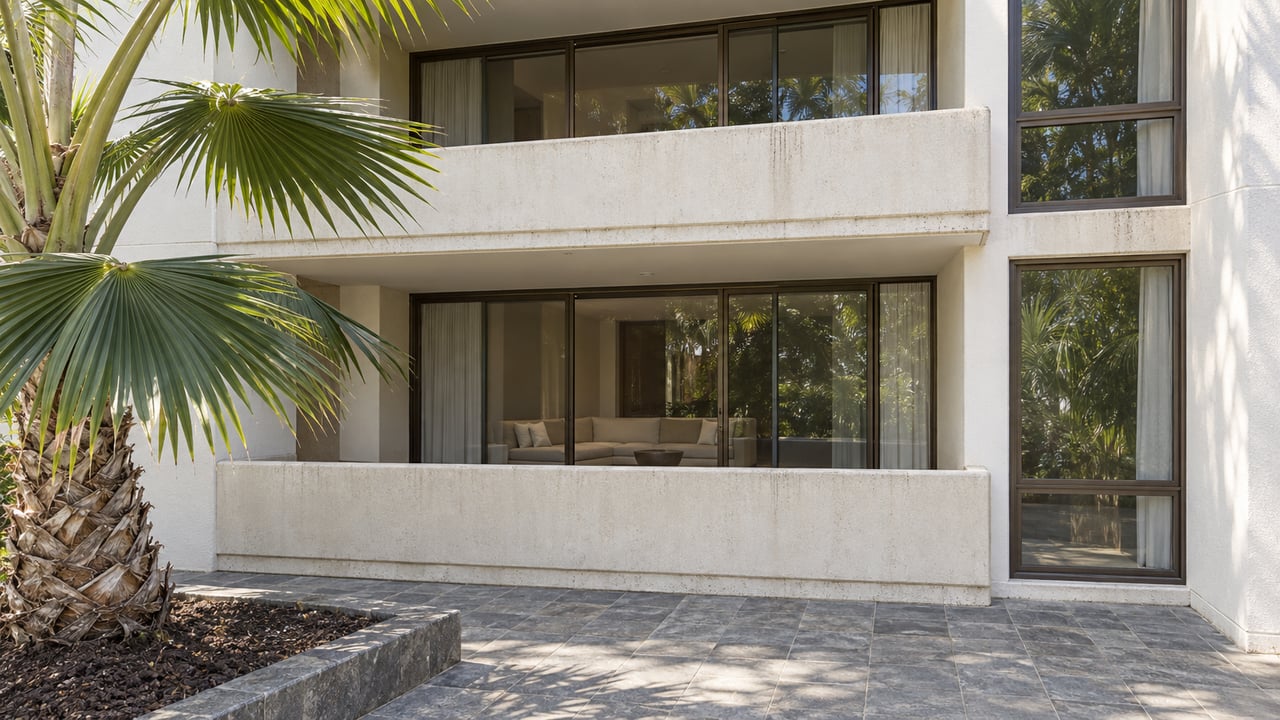
Buying an older oceanfront unit on Diamond Head's Gold Coast in 2026 means buying into a building that still has a fire-code decision ahead of it. The building's price, its maintenance fee and its financing all depend on that decision. In January 2025 Honolulu rewrote the schedule for existing residential high-rises. The new law sets a firm date for each building to choose its plan, and that date falls inside the ownership window of anyone buying now. For several of the best-known addresses on Kalakaua Avenue, the city's own records show that plan hasn't been settled yet.
The schedule that replaced the old deadline
Most explanations of Honolulu's high-rise rules still describe the original plan from 2018. Buildings had to finish fire and life safety evaluations by 2021 and pass them by 2025. A KHON2 explainer published July 27, 2026, repeats those dates. They no longer govern. Bill 55, enacted as Ordinance 25-4, was approved by the mayor according to the City Council docket entry dated January 3, 2025. The text of Ordinance 25-4 sets a new sequence:
- By May 3, 2030: each building owner must meet with unit owners to discuss a design plan, financing options and implementation timelines. The owner must also file a statement of its plan and intent to comply with the fire authority. Buildings choosing sprinklers must file a financial and design plan by the same date.
- By May 3, 2038: the whole building must be protected by an approved automatic sprinkler system or by alternative fire safety systems the fire authority approves. The building can also comply by earning an acceptable score on its life safety evaluation.
- Up to May 3, 2048: the fire authority may extend the common-area deadline to this date, but only if sprinklers already protect the common areas along the building's egress path.
The 2038 date gets the attention, but the 2030 date matters more for a buyer. That's when a board has to put a design, a financing approach and a timeline in front of owners and on file with the city. Before then, a building can be actively working on compliance while nobody outside the board room knows what it will cost. Anyone who buys in 2026 and holds for five years owns through that meeting.
Where the named Gold Coast buildings stood
The Honolulu Fire Department reports evaluation results to the City Council. Its annual report dated May 20, 2025, is the most recent scored report available. It counted 303 buildings that had submitted evaluations. Thirty had an acceptable score and 273 were still working with their design professionals to reach one.
The Gold Coast addresses in that report all appear in the second group:
| Building | Address | Acceptable score in HFD's May 2025 report |
|---|---|---|
| Sans Souci | 2877 Kalakaua Ave | N |
| Colony Surf | 2895 Kalakaua Ave | N |
| Diamond Head Apartments | 2969 Kalakaua Ave | N |
| Coral Strand Apartments | 2979 Kalakaua Ave | N |
| 3003 Kalakaua | 3003 Kalakaua Ave | N |
| 3019 Kalakaua | 3019 Kalakaua Ave | N |
An "N" in that table isn't a finding about whether a building is safe to live in. It means that as of May 2025, the building hadn't yet reached the score the city accepts as compliance. Most of Honolulu's older high-rises were in the same position. The department's existing high-rise roster, last updated April 24, 2026, shows that all six buildings have submitted their evaluations. That roster tracks submission, not scores. A board may have improved its score since then. The only way to know is to ask the building for its current evaluation.
Three possible outcomes, each with a different cost
For a building in this position, the ordinance allows three broad outcomes.
The first is a full sprinkler retrofit. A building that commits to sprinklers doesn't need to go through the evaluation, but it does need a permit and a licensed specialty contractor. No source gives a retrofit budget for any Gold Coast building. The closest public reference points come from elsewhere in the city. Honolulu Civil Beat reported in November 2024 that the Marco Polo's 2021 retrofit cost $6 million, about $10,500 per unit. It also reported that Kahala Towers' proposed retrofit was estimated at $4 million to $5 million, about $17,000 to $21,500 per unit. Those figures come from much larger buildings, and they show how per-unit cost rises as the number of owners sharing it falls. A smaller oceanfront building has fewer units to split the work.
The second is to opt out by reaching an acceptable evaluation score, possibly by adding alternative fire safety systems. This route is open to condominium associations and cooperative housing corporations in buildings 10 floors or higher. It comes with an obligation. A building that opts out must give verifiable disclosure to all current and future owners, shareholders and residents, including real estate sales disclosures. So opting out isn't free, either. It becomes a permanent item in the building's sales paperwork that every future buyer sees.
The third is an exemption. Buildings where every unit has exterior access and a continuous exit path, with no full-length interior corridors, are exempt from the sprinkler requirement. Whether any particular Gold Coast building's layout qualifies is a question for its association and design professional, not something to assume from the outside.
Each outcome changes what an owner pays and what a future buyer will be told. The 2030 filing is where a building commits to one of them.
The financing link that runs through insurance
The fire code matters to a buyer's lender as well as to the board. In 2024 Honolulu condo associations went through a sharp insurance squeeze. Civil Beat reported that Fannie Mae and Freddie Mac required full hurricane coverage. Buildings that couldn't buy it fell outside standard mortgage financing, which left buyers needing cash or alternative loans and made refinancing harder for current owners. In April 2026 a Hawaii Green Infrastructure Authority executive told KHON that at the peak of the crisis about 400 buildings lacked full replacement coverage. That left about 40,000 units ineligible for conventional 30-year loans.
That pressure has eased. Hawaii News Now reported in December 2025 that premiums had fallen 30% to 70% depending on coverage as a state fund added competition. One example was Moiliili's Hale Kulanui, where the hurricane premium dropped from $103,633 to $37,475 a year. No source reports premiums or lender eligibility for any individual Gold Coast building, so the relief can't be assumed to apply to a particular address.
The state's response ties insurance and fire safety together. In May 2026 Governor Green approved a condominium association loan program run by HGIA. It funds risk-reducing repairs such as sprinklers, pipes and roofs. To qualify, an association must first be denied by a lender and must agree to carry full replacement property and hurricane coverage once the repairs are done. The state's June 2026 Condominium Bulletin lists the direct loan rate as a fixed 7% on a 20-year term. New commitments are possible through June 30, 2027, subject to available funding. HGIA describes 20 years as the maximum term.
For a Gold Coast board weighing sprinklers, that program sets a specific window. Commitments are open until June 30, 2027, almost three years before the 2030 plan deadline. A board that uses the program would turn a large one-time assessment into a long repayment carried by owners for up to two decades. A board that waits may find the program closed when it files its plan.
What to request before you write an offer
On the Gold Coast, the documents that tell you a building's fire-code status are the ones a casual buyer is least likely to ask for. These are the ones that answer the questions above:
- The current life safety evaluation and its category scores. The ordinance requires the licensed design professional to give the scores by category to the association or co-op corporation. Compare them with the May 2025 HFD table to see whether anything has moved.
- Board and owner meeting minutes that mention the 2030 plan. Look for whether a design plan, financing option or timeline has been discussed, and whether the building is leaning toward sprinklers, alternative systems or an opt-out.
- Any opt-out disclosure. If the association or co-op has voted to opt out, the ordinance requires disclosure to future owners and shareholders.
- Reserve study and assessment history. Check whether fire-safety work is budgeted in reserves, planned as a special assessment or not yet addressed.
- The master insurance policy and the building's lender eligibility. Confirm that full replacement and hurricane coverage are in place, and ask your lender early whether the project qualifies for conventional financing.
- Any HGIA loan application or commitment. If the board has applied, the repayment terms will affect maintenance fees for years.
These requests apply to cooperative housing corporations as much as to condominium associations. The ordinance names both, and both carry the same disclosure obligation. None of this replaces review by your own attorney, lender and insurance professional. These documents tell you which of those conversations you need to have.
A short FAQ
Does an "N" in HFD's report mean a building has broken the law? No. Under Ordinance 25-4, compliance is due by May 3, 2038, and the planning statement is due by May 3, 2030. An "N" in the May 2025 report means the building hadn't reached an acceptable score at that point.
Is Diamond Head Vista on the Gold Coast list? HFD's records place Diamond Head Vista at 2600 Pualani Way, not on Kalakaua Avenue. That's why it doesn't appear in the table above.
Can a building appeal its score? Yes. An association or co-op corporation can file a written appeal within 45 days of the completed evaluation or the fire authority's determination, whichever is later. HFD reported no appeals as of May 2025.
Are the Marco Polo and Kahala Towers costs a guide to what a Gold Coast building will pay? They're citywide reference points, not estimates for any Gold Coast address. Each building's cost depends on its own design, size and number of units.
If you're weighing a unit at Colony Surf, Sans Souci or any of the older buildings along this stretch of Kalakaua, Alesia Barnes and her team can help you gather the evaluation scores, meeting minutes and insurance documents before your offer goes in, so the 2030 decision is something you can plan for. Let's Connect.
This article is general information, not legal, tax or financial advice. Consult a qualified professional about your situation.